A Simplified Guide To Safer [Oral] Sex

Blowjobs, fellatio, giving head, eating out, cunnilingus, rimming. These are all terms used to reference oral sex which is any activity that involves the mouth, lips, or tongue, to stimulate the genitals, or anus of a sex partner. According to the CDC, more than 85% of sexually-active adults (ages 18 to 44) reported having oral sex at least once with a partner, showing just how common oral sex is. 

The safest situation, other than abstaining from oral sex, is to only have oral sex if you are in a sexually monogamous relationship and you and your partner have both been tested recently. Not everyone is in this situation, and that should not deter you from having oral sex.   

Oral sex can be extremely pleasurable, but it is important to take precautions since STI (Sexually Transmitted Infection) transmission can occur. Here are some critical things to know when engaging in oral sex. 

1. A person can acquire an STI while participating in oral sex

According to the CDC, certain infections such as Chlamydia, Gonorrhea, Syphilis, Herpes, HPV, and in rare occasions, HIV, can be transmitted during oral sex. Furthermore, according to Avert, a charity providing accurate and trusted information about HIV and sexual health, notes that if you are engaging in oral-anal sex you could contract infections such as hepatitis A and E.coli. There is generally a very low risk of HIV infection from oral sex unless the receptive partner is living with an STI and has genital sores, or the partner providing oral stimulation has an STI and is symptomatic with sores, warts, or bleeding gums.  

Not all STIs have symptoms and/or symptoms could be more subtle. The University of Florida's Student Health Care Center recommends “looking before you lick,” to check for lesions, growths, or unusual discharge in the genital area. If you notice any of these, hold off on oral sex until your partner gets tested since these symptoms may be due to STIs. Furthermore, according to Avert, infections can be passed on even if there are no obvious signs or symptoms, meaning you should be getting tested frequently. 

If you are sexually active, the best practice is to get tested for STIs frequently. The CDC provides extensive guidelines for how often you should get tested based on your demographic, but it is advisable to get tested with each new partner for full transparency. Furthermore, many are unaware of window periods, the time it takes for an STI to read as positive after it has been transmitted. While some STIs only take a week to show up on a test, some may take up to four months.

It is always important to discuss your safer sex plans with your partner(s) including your test history and results, any sexual health concerns you are currently experiencing, and how this information will inform your plans for practicing safer [oral] sex. Greatist provides a helpful template on how you can speak to new partners about your sexual health status. 

To learn more about STIs and how to talk about them head over to our  recent blog post, Discussing Your STI Status and Practicing Safer Sex

2.  Use barrier methods for protection 

A way to protect against STIs during oral sex is by using barrier methods such as condoms and dental dams. There are a variety of brands, styles, and flavors of barrier methods to choose from, which can be fun to mix it up. You and a sexual partner can get a variety of barrier methods and try out a new one every time you engage in oral sex! A good rule of thumb is to always have your barrier method of choice with you so that you can always engage in safer oral sex. Lastly, make sure to use a new barrier for each sex act. 

External Condoms

If you are giving oral sex and your partner has a penis, we recommend using an external condom to prevent the transmission of STIs. To learn more about how to use external condoms, visit our Instagram for an IGTV demonstration led by ESW associate, Marnie Spiegel.

Dental Dams

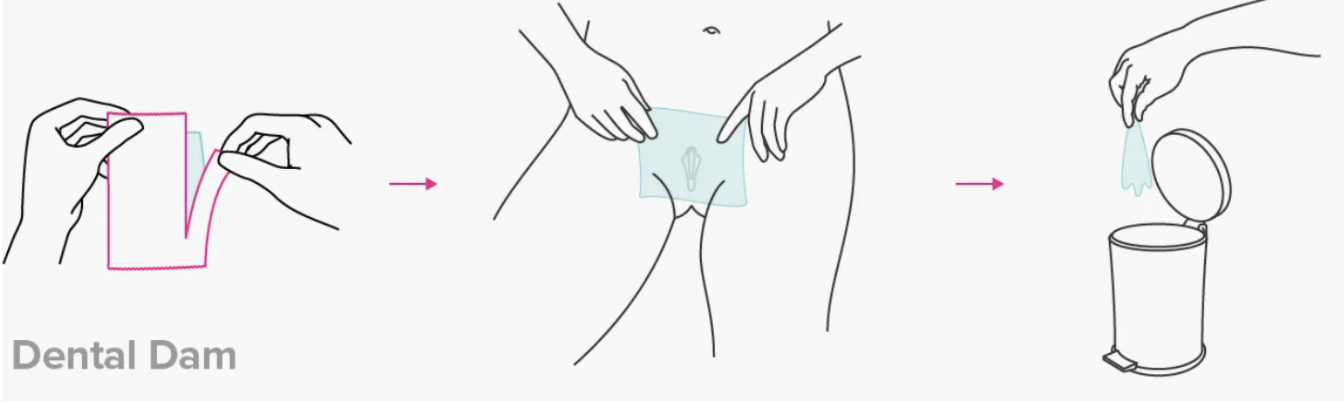
If your partner has a vulva, or you are stimulating your partner anally, we recommend using a dental dam. To use a dental dam, hold one side against your partner’s vulva or anus and lick the other side, making sure to never turn the dam over. This graphic from Healthline shows how to use a dental dam.
Source: Healthline

Source: Healthline

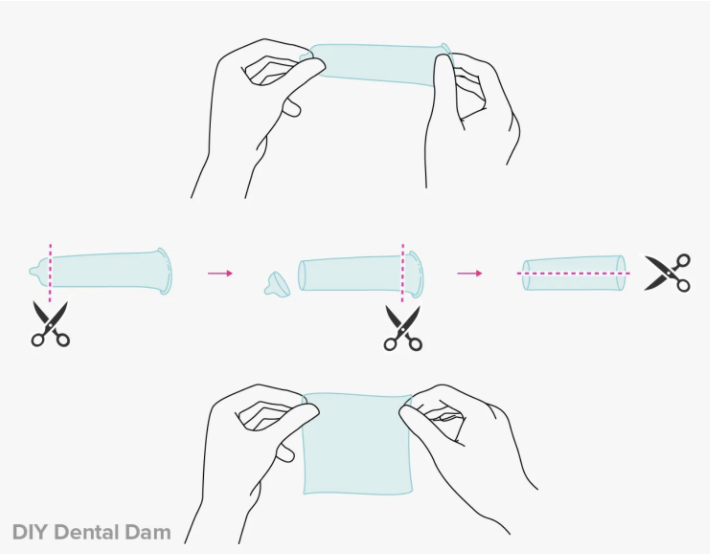
Experts also recommend using a dental dam if the receptive partner is menstruating because menstrual blood can carry bacteria and viruses. Sometimes it can be difficult to find dental dams on short notice. Dental dams cannot always be found at gas stations, grocery stores, or doctors’ offices, so Healthline recommends going to a local adult store that sells pleasure devices, lube, and condoms or ordering them online at stores such as World Condoms or Undercover Condoms. There’s no need to worry because you can make your own by cutting a condom lengthways from bottom to top/the tip to create a single piece of material that can be used as a dam. This graphic from Healthline illustrates how you can create a dental dam out of a condom.
Source: Healthline

Source: Healthline

Watch this video from University of Chicago’s Wellness Center that teaches you how to convert an external condom into an effective dental dam!

Finger Condoms

Finger cots, or more commonly known as finger condoms, can be used when fingering a vagina or anus. Elizabeth Boskey at Very Well Health states that finger condoms can be an effective barrier method if you are only using one finger. They can reduce the risk of certain STIS and are often more comfortable than gloves. They note that finger condoms can be found in some first aid aisles of drugstores, but you can also purchase them online or make them by cutting a finger off of a latex glove. You can also experiment with different flavors of barrier methods, to excite your tastebuds and make safer oral sex more enjoyable - we recommend the strawberry flavor.

3. Brushing your teeth or using mouthwash before and after engaging in oral sex can lead to infection

You may want your breath to smell good before “going down” on someone, but brushing your teeth can actually increase your risk of contracting an STI. According to the University of Georgia’s Health Center, flossing and brushing your teeth can cause your gums to bleed, thus irritating them and making it easier for an infection to pass from one partner to another. In a 2017 interview with Shape magazine, endodontist Gary Glassman, D.D.S shared that you should only be rinsing your mouth out with water, nothing else, before and after having oral sex.

Oral hygiene is a necessary part of having safer oral sex. According to the CDC, poor oral health can lead to tooth decay, gum disease, bleeding gums, and oral cancer, thus making it easier for STIs to be transmitted. Make sure you are brushing and flossing regularly!

4. If you think you have the common cold, hold off on oral sex, as you may have an oral infection

It is important to note that some oral infections can be easily confused with the common cold. Assistant professor of clinical medicine at Northwestern Memorial Hospital in Chicago, Gil Weiss, M.D, reports that some symptoms of STIs (such as a sore throat, cough, fever, and enlarged lymph nodes in the neck) are similar to symptoms of a common cold. The University of Georgia’s Health Center recommends abstaining from oral sex if your partner has a cold sore on their mouth or they are living with sores, discharge, or unusual odors on their genitals as these may be signs of infection.

Oral sex is pleasurable, but can be made even more pleasurable if sexual safety is taken into account. If you are feeling nervous about having oral sex because you think you may be experiencing symptoms of an STI, we recommend you hold off on oral sex until you get tested. Keep these tips in mind as you engage in oral sex, but most importantly make sure you are having a pleasureful time! 

TLDR:

  1. A person can acquire an STI while participating in oral sex

  2. Use barrier methods for protection 

  3. Brushing your teeth or using mouthwash before and after engaging in oral sex can lead to infection

  4. If you think you have the common cold, hold off on oral sex, as you may have an oral infection

Stress Cycles: What they Are and How to Break Them

Do you feel as if you are in a constant state of stress? Well, you may be. Stressors can be found all around us, especially now. Did you know that many people who experience stress do not complete their stress cycles? According to Psych Central, stress isn’t a one-time event with a single cause and reaction; it is a cycle with many phases. We complete a stress cycle when our bodies learn that we are safe after facing danger.

Drs. Emily & Amelia Nagoski emphasize the importance of completing the stress cycle in their book, Burnout: The Secret to Solving the Stress Cycle. According to Burnout, when we do not confront our stress, we continue the stress cycle and our bodies are in constant activation with increased blood pressure, increased chance of heart disease, and issues with digestion. Thus, completing the stress cycle is imperative for our health. 

According to an article on Psych Central, there are five main stages of the stress cycle. These stages are, in order, the external stressor, internal appraisal, physiological response, internalization, and coping. 

Stage One: The external stressor, or simply, the triggering event, is the only aspect of stress that your mind and body do not play a direct role in. 

Stage Two: Internal appraisal happens just before, during, or after the actual trigger occurs. At this stage, your senses are taking in information that something has gone awry, sending a signal to your amygdala (the part of your brain that is responsible for processing emotions such as fear and rage). Once the amygdala is activated, a signal is sent to the hypothalamus and the pituitary gland, which are responsible for maintaining homeostasis (balance in the body).

Stage Three: Physiological responses occur once the amygdala is activated. Once the hypothalamus and the pituitary glands are signaled by the amygdala, the sympathetic nervous system becomes activated, thus launching your body into the fight or flight response. This response stimulates the cardiovascular system while accelerating your heart rate. At the same time, your parasympathetic nervous system is suppressed, causing your immune and digestive systems to shut down.

Stage Four: Internalization is when you begin to become aware of the stress. In this stage, you could experience physical reactions such as increased heart rate, upset stomach, or body aches which become more noticeable than in stage four. These physical reactions may cause you to worry about how well you are handling the stress, thus causing you to feel worry, anxiety, and dread. 

Stage Five: The final stage of the cycle is coping, a.k.a., doing something that alleviates the discomfort. While some coping mechanisms decrease stress, others can increase it. This is called maladaptive coping. When people engage in maladaptive coping, their strategies may work in the short-term but not in the long term. Some of these mechanisms include consuming psychoactive drugs, alcohol, constantly checking your phone, mindless media, and throwing yourself into work. These coping mechanisms actually further activate the physiological stress responses in your body, causing you to stay in a hyper-aroused state, thus leading to more stress. 

In an interview on Brene Brown’s podcast, Unlocking Us, the Nagoski sisters spoke about the burnout phenomenon in relation to stress cycles. They emphasize how emotions and stress can impact your entire nervous system. In order to create balance in your nervous system, you have to complete the stress cycle. Emily Nagoski debunks the idea that if we fix the issue that caused the stress, we have dealt with the stress itself. In reality, when we do this, we stay in a chronically elevated state of stress. 

In order to complete the stress cycle, we must reduce the stress we are experiencing. There is no one surefire way to reduce stress, but the Nagoski sisters do offer some helpful suggestions. Moving, breathing, laughing, speaking with your loved ones, crying, or doing something creative can have a profound impact on reducing stress.

Let’s Break These Down

Moving can include any physical activity such as running, yoga, stretching, walking, or biking. According to the Nagoski sisters, any activity that moves the body is helpful.

Breathing regulates your nervous system by increasing the amount of oxygen in your bloodstream. In fact, a study published in the Breathe, a journal published by the European Respiratory society, there appears to be potential for controlled slow breathing methods to optimize physiological health. The Nagoskis recommend taking a slow breath in and a slow, long breath out when you are feeling stressed. This is called paced breathing, and apps such as Insight Timer, Calm, and Headspace can help you practice this method. Breathing will engage the parasympathetic nervous system, therefore regulating the central nervous system. You may notice that you are unable to stay focused on one thought when you are breathing in this way, and that is normal. In fact, that’s the point. If your thoughts are more steady, that is okay too.

Any positive social interaction can help reduce stress. When you have a positive social interaction, your body feels as if it is at home. This interaction could be super brief such as saying hello to a cashier, or complimenting a neighbor or passerby, or talking to your best friend.

According to Nagoski and Nagoski (2019), laughter will help alleviate stress, but only if it is authentic. In their podcast interview, Dr. Amelia Nagoski shared, “it has to be the slightly embarrassing, mouth hanging open, belly jiggling, uncontrolled, ridiculous laughter that really takes over your body, you can’t stop laughing. That laughter will take you all the way through the end of a stress cycle.”

The next suggestion is to engage in affection. This can include speaking to a loved one or hugging (safely). According to an article in the Harvard Health newsletter, hugging for 20 seconds can increase your oxytocin levels. Higher oxytocin levels have been correlated with lower blood pressure and heart rates. Therefore, there is a possible link between hugging and lower blood pressure.

Crying will not solve the problem, but it can help allow physical tension to leave your body.

Creative expression can mean whatever you want it to mean, including painting, knitting, sketching, writing, singing, baking, or anything else that is an act of creation.

While none of these stress-reduction methods are the end-all-be-all, they can help you to complete the stress cycle. The most important thing is that you make it through the stress cycle, to protect your physical and mental health.

10 Pleasure Devices from Sex-Positive, Feminist Brands to Put on Your Holiday Wish List

Sex toy sales have risen significantly since the outbreak of the Coronavirus pandemic. The holidays are quickly approaching and it can be difficult to decide what you want to put on your holiday list. Looking for some inspiration? We’ve got you covered. Treat yourself to a pleasure device this year from one of these sex positive brands. 

*We are not receiving a commission for any of these products. They have been researched by our staff and we have not received any incentives from these companies.* 


Brand #1: Woo More Play

3 Reasons Why We Love Woo More Play

  • They believe that we deserve great sex, and we happen to agree. 

  • Their products are as natural as possible by using only organic ingredients, as fun as possible, and are tested as much as possible. 

  • Their products are cruelty free, which means they are not tested on animals.

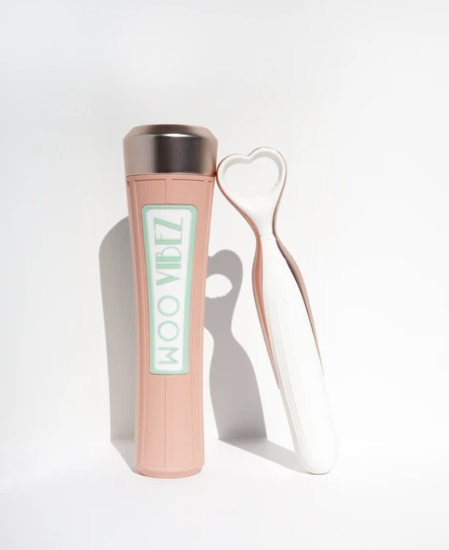
Their vibrator "i cum first" is designed to pleasure people with vulvas. It has 5 speeds and it is both portable and chargeable! It has curves that contour across the labia majora, labia minora, and clitoris for external stimulation. But it can also be used internally for g-spot stimulation. 

Picture1.png

Brand #2: Dame

3 Reasons Why We Love Dame

  • They are passionate about closing the pleasure gap (a.k.a., the disparity in sexual satisfaction between people with vulvas compared to people with penises). 

  • All of their silicone is medical-grade.

  • Their toys are made with safe, ethical, and environmentally-friendly practices. 

Their most popular vibrator is the "Eva II", a hands-free vibrator that provides clitoral stimulation. It can be used solo or with a partner. It is waterproof and has 3 speeds. Eva’s wings nestle under the labia for a secure, comfortable fit. 

Picture1.png

Brand #3: Je Joue

3 Reasons Why We Love Je Joue

  • Je Joue, directly translated from French, means “I play” and Je Joue believes that play is an extremely important part of a healthy sex life. 

  • They advocate for self-love and the introduction to new experiences to people of all sexual orientations and gender identities. 

  • They also focus on sex positivity, which they define as “having a progressive and non-judgmental attitude towards sex and sexuality.”

One of their best sellers is the "Mimi soft clitoral vibrator" which has 5 speeds and 7 powerful patterns. It is also rechargeable and waterproof. 

Picture1.png

Brand #4: Chakrubs

3 Reasons Why We Love Chakrubs

  • Chakrubs are sex toys handmade from natural crystals. According to Chakrubs, crystals have perfect molecular structures that have positive effects on our electro-magnetic fields.

  • When our energenity bodies are at ease, we are at ease, we are open to healing, peace, love, and all of life’s pleasures.

  • Chakrubs confidently assures their customers that their labor practices are legal and ethical. They also make regular donations to a number of organizations in an effort to minimize their environmental impact.

Picture1.png

Brand #5: Ohnut

3 Reasons Why We Love Ohnut

  • Ohnut is an intimate wearable that can help manage and potentially reduce pain during penetrative sex by allowing vulva owners to customize the depth of penetration.

  • Ohnut believes that the bedroom can be a place of joy, even if you have struggled in the past. They have partnered with renowned sexual medicine clinicians, holistic practitioners, and other like minded professionals to create this product. 

  • Ohnut is made from an FDA approved body and skin safe polymer blend. It is a thermo-set material that is free of BPA, phthalate, and latex. 

Ohnut is worn externally at the base of a penetrating partner (on the shaft of a penis or dildo). Each set comes with 4 linking rings, so you can discover what feels good for each partner. 

Picture1.png

Brand #6: b-Vibe

3 Reasons Why We Love b-Vibe

  • They are a result of years of research. Each b-Vibe product utilizes innovative design tactics to address specific, often unaddressed, sources of anal pleasure. 

  • Their core mission is to empower exploration through education. They also promote inclusivity and informed play.

  • Their website offers a range of guides for those new to anal pleasure and for those who are more advanced.

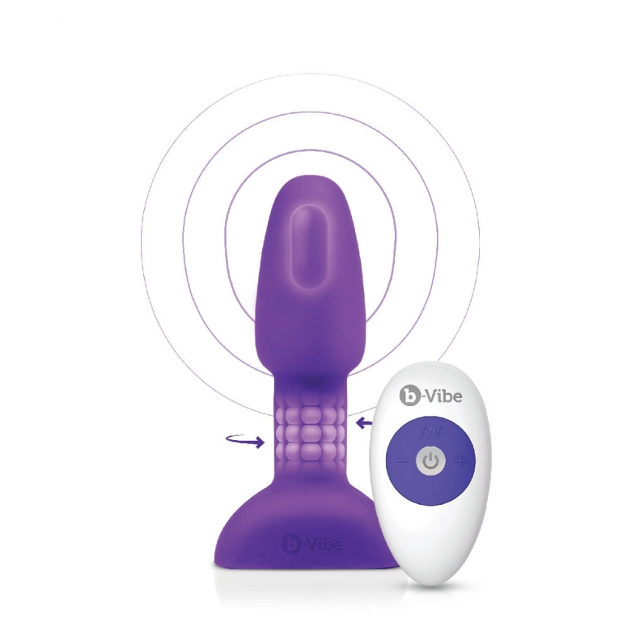
The Rimming Plug Petite is the perfect toy for those experienced with anal play or those looking to get started. It has been cited by many publications as the best anal sex toy for all. The toy is made from 100% body-safe silicone, is rechargeable, and has a wireless remote control that works up to 30 feet away.


Brand #7: Lioness

3 Reasons Why We Love Lioness

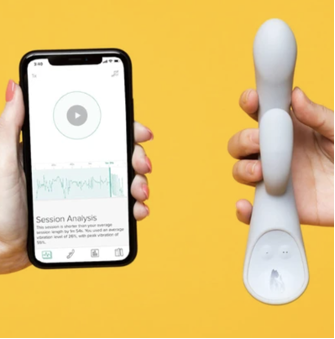
  • Lioness is an advanced vibrator that connects to a mobile app to help visualize arousal and orgasms. 

  • Their women-led engineering team has worked to craft a vibrator and app that allows those using it to understand how your body responds to climax in order to make climax more enjoyable. 

  • Lioness is made out of 100% medical-grade silicone that is phthalate-free and non-porous. 

Picture1.png

Brand #8: Buck Angel

3 Reasons Why We Love Buck Angel

  • Buck Angel shares an empowering message of self-acceptance and is on a mission to encourage everyone to be comfortable in their own skin. He is a FTM trans person and wants to help others like him to live their lives authentically. 

  • Buck aims to inspire people to redefine gender and foster a new generation as they discover the fluidity of sexuality and navigate gender politics. 

  • He proclaims that it is not what is between your legs that defines you, but how you feel and identify. 

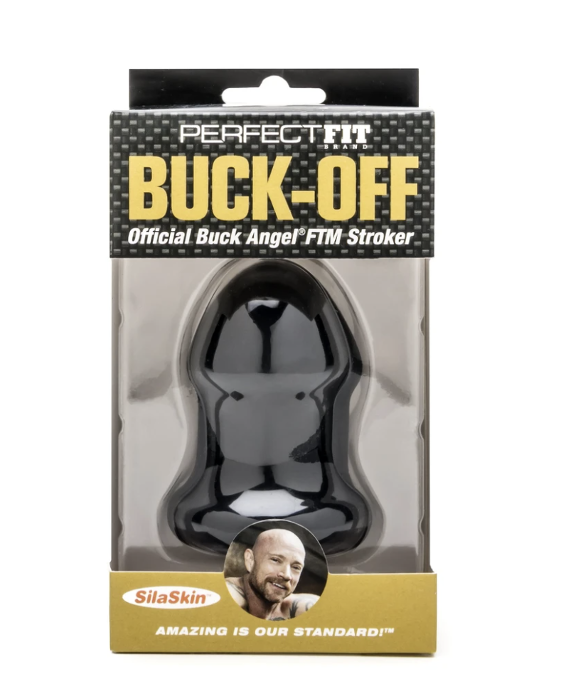
The Buck-Off stroker is the first product designed specifically for trans men to engage in stroking fun. It allows them to “jack-off”. It is made with Perfect Fit’s ultra-soft SilaSkin. Buck Off won Most Innovate Toy for 2017 and is the first sexual wellness product designed for trans men by a trans man!


Brand #9: Biird

3 Reasons Why We Love Biird

  • Their mission is to dispel the taboo messages surrounding sex toys and other products designed to make you feel good. They recently launched a petition highlighting how the current policies around adult content are inconsistent, damaging, and biased against women and other marginalized communities. They hope to challenge social media platforms and their discriminatory policies. 

  • They believe that well-designed pleasure should be available to all, not just people “in the know” or with tons of money to spare. 

  • It doesn’t look like your typical sex toy. It can be used as decoration by sitting on the charger and becoming a lamp. Plus, it is whisper quiet!

Their Obii clitoral massager with suction and vibration modes combines suction sensations with powerful vibrations. It is made out of silky-smooth and squishy body-safe silicone. Major perk! It is whisper quiet.  

Picture1.png

Brand #10: Le Wand

3 Reasons Why We Love Le Wand

  • Le Wand is woman-founded and strives to bring unparalleled quality to an industry that is not always transparent.

  • Their toys are designed with pleasure in mind for all bodies.

  • They believe that everyone has a right to experience pleasure, to feel good about their sexuality, and to love their body.

Their best seller is the Le Wand Rechargeable Vibrating Massager. It is the winner of Cosmopolitan’s Sexcellence Award for “Most Powerful Sex Toy”. With 10 speeds and 20 vibration patterns, the toy is guaranteed to deliver intense and sensual pleasure.