
Coming Out as Bisexual in a World That Doubts You: What Bi Erasure Is, Why It Hurts, and How to Reclaim Your Identity
Written by Abby Gerding, MFT
What Does It Mean to Be Bisexual?
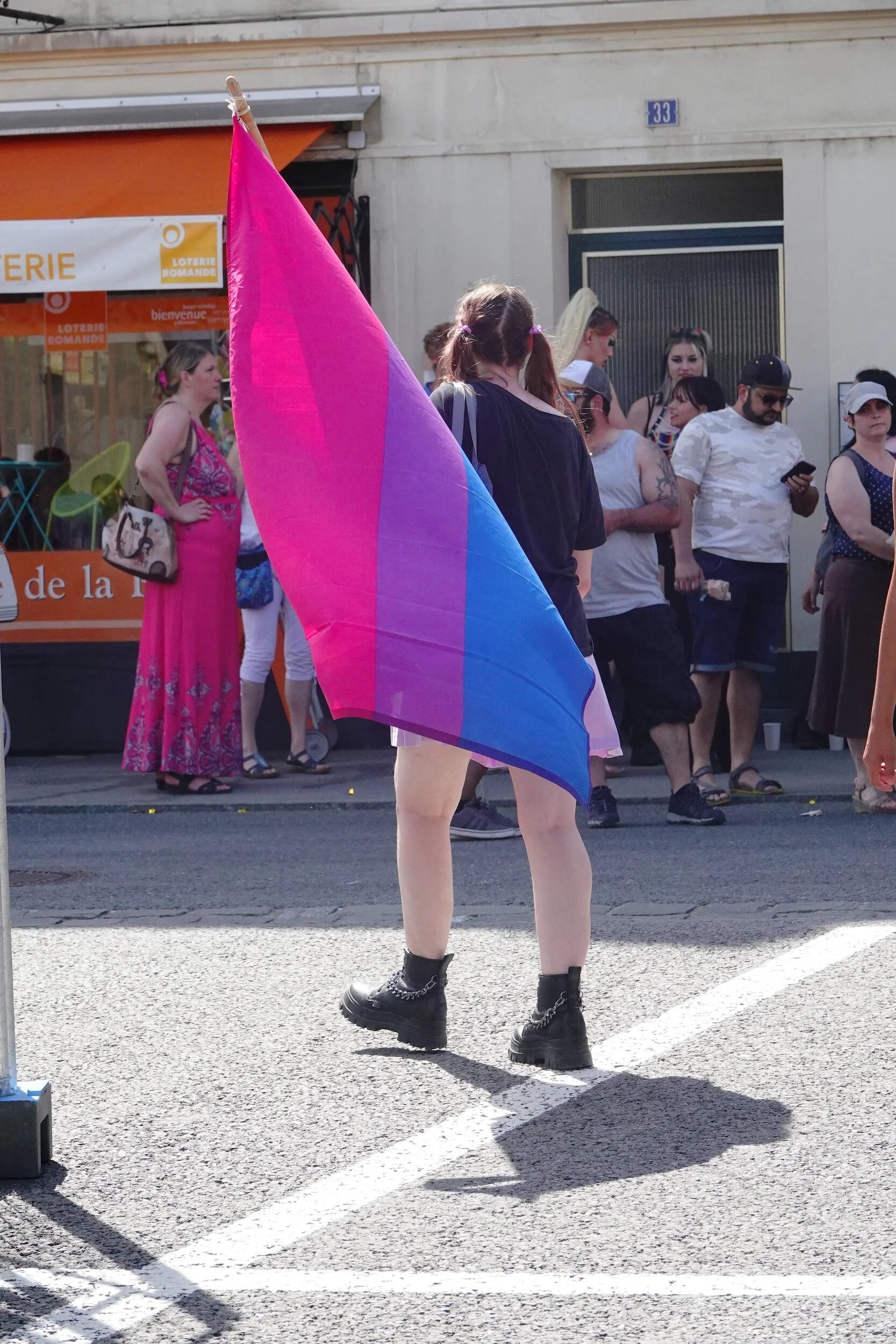
Bisexuality is typically used to describe a sexual, romantic, and/or emotional attraction to folks of multiple genders, often including one’s own gender. Bisexuality often comes with a number of misconceptions, which are important to discuss.
One of the most common misconceptions is that bisexuality is a specific attraction to folks who fall under a traditional gender binary. The reality is that bisexual folks can experience attraction to multiple gender expressions, including non-binary, agender, trans, and gender fluid folks. Along these lines, it is common to hear the assumption that bisexuals experience a 50/50 split in their attraction to men and women. For many people, attraction is not neatly split and may be to more than two genders.
Bisexuality is not just a “phase,” nor does it change depending on the gender of one’s partner. People don’t stop being straight or gay as soon as they enter into a relationship. So, why would that be different for bisexual people? While some people may experience more fluidity in their sexual identity or explore multiple labels in their journey to understanding their sexuality, bisexuality is a valid identity and is not a stepping-stone for many. Bisexuals do exist and do, in fact, make up the largest portion of the LGBTQ+ population, according to recent census data.
Why Coming Out as Bisexual Hits Differently
Coming out as bisexual presents unique challenges. The myths mentioned above are only a small number bisexuals face when coming out. Both straight and queer communities may have doubts or carry misconceptions. Bisexual folks may feel a sense of pressure to explain their relationship history in order to provide a sense of validity to their identity that other folks may not feel the need to explain. Both straight and LGBTQ+ communities may subscribe to the idea that this is a “phase” or pose questions that feel invalidating.
It can be especially difficult if the person coming out is already in a relationship or entering into one. If a bisexual person is in what may appear to be a straight-presenting relationship, their identity may not be seen as valid. They may be assigned a label that doesn’t fit for them based on the way their relationship looks. They may also face some skepticism that makes them feel out of place in the queer community, but they may not feel like they have a place in straight communities. This leads to a lot of bisexual folks feeling stuck in the middle or isolated from their community.

What Is Bi Erasure and Where Does It Come From?
Bi erasure is a widespread phenomenon in which the legitimacy and prevalence of bisexuality is denied or dismissed. This process may occur through external factors, such as the exclusion of bisexuals from queer spaces, the belief that bisexuality is a transient identity rather than a valid destination, and the lack of representation, among other things. It can also be reinforced by internalized biphobia. The self-doubt that may be a product of many of these assumptions can be a form of self-erasure. A 2026 study looked at a number of themes that contribute to bi erasure, and found that a number of the misconceptions discussed here are major contributors to the process. The stereotypes and myths that surround bisexuality often serve to create doubt or further the idea that the bisexual identity is illegitimate, which increases the amount of stress bi folks face and contributes to a sense of invisibility.
The lack of bisexual representation and validity often leads to the responsibility falling on bisexuals to defend and explain their identity. When a person’s sexuality is determined based on the perception of who they are in a relationship with, it often leads to assumptions that leave little room for bisexuality. This can be exhausting and have negative impacts on mental health.
The Real Mental Health Cost of Being Doubted
Many studies from across the world suggest that bisexual people report higher levels of depression and anxiety than both heterosexual and gay/lesbian populations. A 2022 Australian study suggests over 80% of bisexual people have experienced a mental health disorder compared to just over 63% of lesbian and gay people, and over 41% of heterosexual people.
As mentioned previously, bisexual mental health is often impacted by a great deal of chronic stress. Many queer folks experience increased rates of discrimination due to their sexuality. However, bisexual people may be subjected to judgment and discrimination from both heterosexual and gay/lesbian communities, which can add more pressure and stress, leading to higher levels of anxiety and depression. People may also be less likely to come out due to the stigma, which may cause people to feel more alone and, in turn, not want to come out.
What Affirmation Actually Looks Like
Affirmation can happen in three ways. Internal affirmation specifically looks at the internal validation of one’s identity. Empowerment can come from internal strength and knowing who you are can help protect against the misconceptions or doubt that may be present when coming out. Another source of affirmation comes from relationships with those closest to you. Having the support of a partner(s) and family (chosen or otherwise) can be wonderful. Not having to prove oneself to the folks around them or defend themselves can be very affirming. With romantic partners, not reinforcing biphobic stereotypes by questioning a partner’s loyalty or attraction can be key to providing an affirming space. Affirmation can also come from the community. When a community openly accepts folks who come out as bi without the assumption that this is a phase or that their partner determines the validity of their sexuality, it can feel incredibly validating. Finding a space where you can feel a sense of belonging and less on the outside of two different spaces creates a sense of visibility and affirmation that can help combat bi-erasure.
How LGBTQ+ Affirming Therapy Supports Bisexual Clients Specifically
LGBTQ+ affirming therapy is a wonderful place to start! Affirming therapy goes beyond simply understanding that bisexuality exists, and enters a space in which bisexuality is honored and there is no pressure to prove that your identity is valid. Bisexual-informed care takes into consideration the challenges and pressures that come with being bi, and celebrates the unique joys that accompany this beautiful identity. The therapy room should be one in which your sexuality is met with warmth rather than skepticism.
You Do Not Owe Anyone an Explanation of Your Sexuality
Bisexuality is valid. Regardless of who you have or have not been in relationship with, how your relationship presents, or whether you are out or not, your bisexual identity is valid. Everyone’s journey is unique and, therefore, does not require proof or justification.
You Deserve a Therapist Who Actually Gets It
Therapy can be a wonderful space to explore your bisexual identity. Having a therapist like our team at Embrace Sexual Wellness who understands the unique joys and challenges that bisexuality comes with is important. We provide LGBTQ+ celebratory therapy in Chicago that honors and affirms the bisexual experience. If you are ready to speak to someone who truly gets it, schedule a free 10-minute phone consultation with one of our sex therapists today!