Worried About Personal Safety as a Trans Person? Tips for the Trans Community and Allies

In light of current political turmoil and discrimination surrounding the transgender and non-binary population, it’s more important than ever for transgender people to be equipped with knowledge to navigate the world as safely as possible. In data released in October 2022 by Everytown for Gun Safety, the number of trans people murdered in the U.S. nearly doubled between 2017 and 2021. There is a constant barrage of mocking pronouns and non-cisgender gender identities by politicians and the public alike. Extremists at the 2023 Conservative Political Action Conference (CPAC) have called for the eradication of transgender people. It is a deeply scary time to be a trans person especially if you live in a hostile home and/or geographic region. In such a circumstance, there are unfortunately no infallible safety methods, but there are precautions you can take to increase your chances of staying safe.

How Can I Maximize My Safety? 

It’s a good idea to have at least a loose grasp of your region’s political climate so you understand your surroundings better. You should also be aware of the factors that make you an easier target. Unfortunately, trans people who don’t “pass” as a cisgender person are more likely to be harmed, and feminine-presenting trans people are also more likely to be harmed since women are already at a higher risk of experiencing violence. Understanding these factors will help you navigate how cautious you need to be.  

Safety Tips

  • Seek out a local or online self-defense class

  • Navigate public spaces with a trusted friend or family member whenever possible, especially at night

  • Stay alert in public spaces – try to stay off your phone while walking

  • If someone tries to assault you verbally or physically, get loud; this will hopefully scare off the perpetrator and if not, it may get the attention of a good samaritan who can intervene

  • Leave a trail before going out: make sure someone you trust knows where you will be

  • If you live in a hostile home environment, consider compiling a “get away bag” in the event that you need to make a hasty exit for your safety

  • Check out this safety planning tool by Forge, a transgender support organization

  • Seek out the support of a trans supportive organization for funding to access gender-affirming care and/or to move somewhere safer

Forging Community

Building a small community of supportive people in your life to offset the detrimental effects on mental health of the transgender discrimination you will likely face is a vital lifeline. This can be a difficult task if you live in a hostile geographic region; you can try Googling your location plus keywords like “trans support,” “LGBTQ support group,” and “LGBTQ resources.” If that ends up being a fruitless endeavor, it’s time to turn to the internet.

Having friends solely online may not be as fulfilling as friends you can see face to face for most people but it is a far better option than feeling completely isolated in a discriminatory environment.

Here are some online support group options:

Tips for Trans Allies

Being a trans ally is more important than ever. Cisgender people have privilege compared to transgender people and leveraging that privilege is integral to fighting for trans rights and safety.

  • Educate yourself on key terminology relating to gender and the political and wellbeing issues surrounding the trans community 

  • Do not take the liberty of sharing someone’s transgender status with anyone who doesn’t already know. As the LGBTQ organization GLAAD puts it, “Do not casually share this information, speculate, or gossip about a person you know or think is transgender. Not only is this an invasion of privacy, it also can have negative consequences in a world that is very intolerant of gender diversity.”

  • Do not ask invasive questions about a transgender person’s gender assigned at birth or their anatomy

  • Challenge anti-trans rhetoric in conversation; cisgender privilege allows you to do so with much less risk of compromising your personal safety than if a transgender person were to do so

  • Read this comprehensive guide to being an ally for more actionable steps or visit ESW’s resource page


The most important thing to remember as a trans person is that being trans is not bad or wrong and the issues with being transgender have to do with hate and vitriol from bigots, not the inherent nature of being trans. Try to indulge in consuming trans joy content when you feel particularly down about being trans because the reality is that being trans is a beautiful thing and you deserve to feel happy and safe. Your challenges and struggles are real and valid, and they don’t define your wholeness.  

Tips for Coping with Identity Questions During Pride

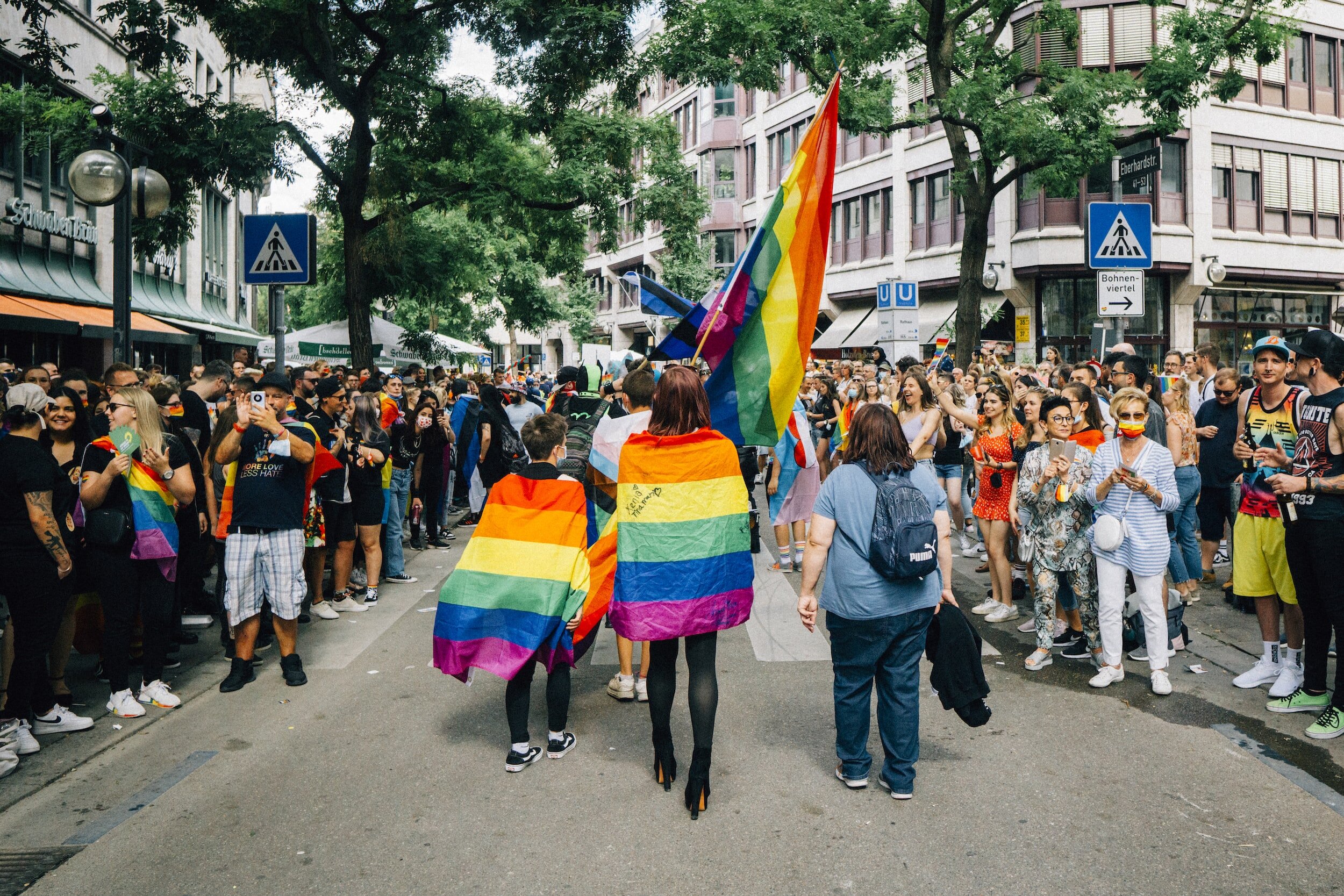
June is pride month, a tradition that started following the Stonewall Riots, largely considered to be the beginning of the modern LGBTQ+ rights movement. It is a time for LGBTQ+ people to celebrate the progress that has been made, pay homage to queer ancestors, protest LGBTQ+ discrimination, and raise awareness of LGBTQ+ issues. But when you feel unsure as to where you fit into the LGBTQ+ community, or if you identify with it at all, this time of the year might bring up mixed emotions. American society defaults to assuming that everyone is cisgender and heterosexual so when you feel like you might not fit into one or both of those identities, questioning is a normal part of navigating it. In fact, being unsure about your identity is so common amongst the LGBTQ+ community that the “Q” in LGBTQ+ stands for both “queer” and “questioning.” If you fall into the “questioning” camp, this article will offer insight into how to navigate your questioning journey and how to approach your involvement in Pride Month events. 

How do I know if I am not cisgender?

Exploring and understanding your gender identity can be a complex journey. It is easy to feel overwhelmed by all the terminology and align your internal experience of gender with how gender identities are defined in words. Gender is a social construct, meaning that the way we understand and define gender identities is not based on objective truth but rather the expectations, behaviors, and roles that a society has assigned to each gender. In America, the mainstream understanding of gender is that it is a binary consisting of “man” and “woman,” but gender is actually a spectrum. Finding where you fall on that spectrum can feel complicated! There are a few things you can take into consideration to help guide your exploration.

Think about whether you feel a disconnect or discomfort with the gender expectations for your assigned sex at birth.

Some, but not all, transgender and non-binary people experience gender dysphoria, a type of psychological distress due to misalignment of one’s sex assigned at birth and gender identity. Dysphoria manifests differently from person to person, but if you feel uncomfortable in your body’s anatomy or dislike the way people perceive you based on gender expression associated with your assigned sex at birth, you might be experiencing gender dysphoria. According to the DSM-5, experiencing gender dysphoria symptoms, including incongruence between one’s gender and anatomy and a strong desire to be another gender and/or have different sex characteristics, for six months or longer qualifies a diagnosis.  

Reflect on which pronouns and gender expression make you feel the most like yourself. 

If you feel uncomfortable when people refer to you by the pronouns associated with your assigned sex at birth, that could be an indication that you are transgender or non-binary. An important caveat here is that pronouns do not always automatically equate with gender identity. Even though it is most common for women to use she/her pronouns, it is not necessary to use she/her pronouns if you identify as a woman. So understanding what pronouns feel validating to you is an important part of navigating gender identity, but it is not automatically the “answer” to how you identify. In addition to exploring which pronouns feel best, you can also try experimenting with gender expression. Gender expression is the way a person chooses to present their gender through appearance, pronouns, and voice. You can experiment with clothing, hair, jewelry, makeup, gender affirming padding like bras, and/or chest binding to see what feels the most you.        

How do I know if I am not heterosexual?

Heteronormativity is the assumption that heterosexuality is the ideal, superior, and default sexual orientation. When you grow up in a heteronormative society, questioning your sexuality is not an obvious option. Similar to gender, it is easy to feel overwhelmed by all the terminology and how your internal experience aligns with definitions associated with different sexualities. Some people know from a young age that they are not heterosexual while others do not figure it out until later in life. No matter what, there is no “correct” time to figure out that you are queer. Here are some suggestions to guide your exploration of your identity:

1. Engage with the LGBTQ+ community and speak with queer people about their experiences. 

Though everyone experiences their sexuality differently, there are patterns and commonalities that connect queer people so talking to others about their experiences and how they figured out their sexuality can provide valuable insight. 

2. Experiment with different intimate experiences and consuming LGBTQ+ media. 

If you are comfortable enough to experiment with being intimate with other people despite not knowing for sure what you will enjoy, this is a good way to test the waters. You should be transparent about your experimentation and uncertainty with any intimate partner because queer people, especially lesbians, have historically been objectified and sexualized by straight people. Some queer people will be totally cool with being an experimentation partner! That being said, it is important to be transparent that that is what you are doing. If you are not comfortable experimenting with another person yourself or you simply want an alternative for self-exploration, you can consume LGBTQ+ media and see how it feels.   

3. Don’t get caught up in labels. 

It is a very human impulse to want to put everyone and everything into an easily digestible box with a label. Some queer people find comfort in having a label to define themselves, while others feel suffocated and limited by it. You do not need a label to be valid in your queer identity.    

Can I still attend pride events if I am unsure of my identity?

Absolutely! Unless an event is advertised to be for a specific identity or group that you definitely do not align with (meaning, you are not identifying with this identity group), you are welcome at pride. Pride events are inclusive spaces where the only qualifying factor to attend is a desire to support and celebrate the LGBTQ+ community. In fact, pride events can be especially helpful to a questioning person; being around queer people and seeing how they express themselves might just be the enlightening moment you are looking for.     

Remember that there is no rush to label yourself or make a definitive decision about your identity on anyone’s timeline but your own. There is no right way or age to discover you are queer. Furthermore, gender and sexuality are fluid! They can change over time and that is okay too. Connecting with a supportive queer community, seeking guidance from LGBTQ+ celebratory therapists and support groups, and taking the time to educate yourself about different gender identities can all be valuable resources as you navigate your journey of self-discovery. Even while you are figuring it all out, you are always welcome at Pride events!

Neopronouns: What They Are And How To Use Them

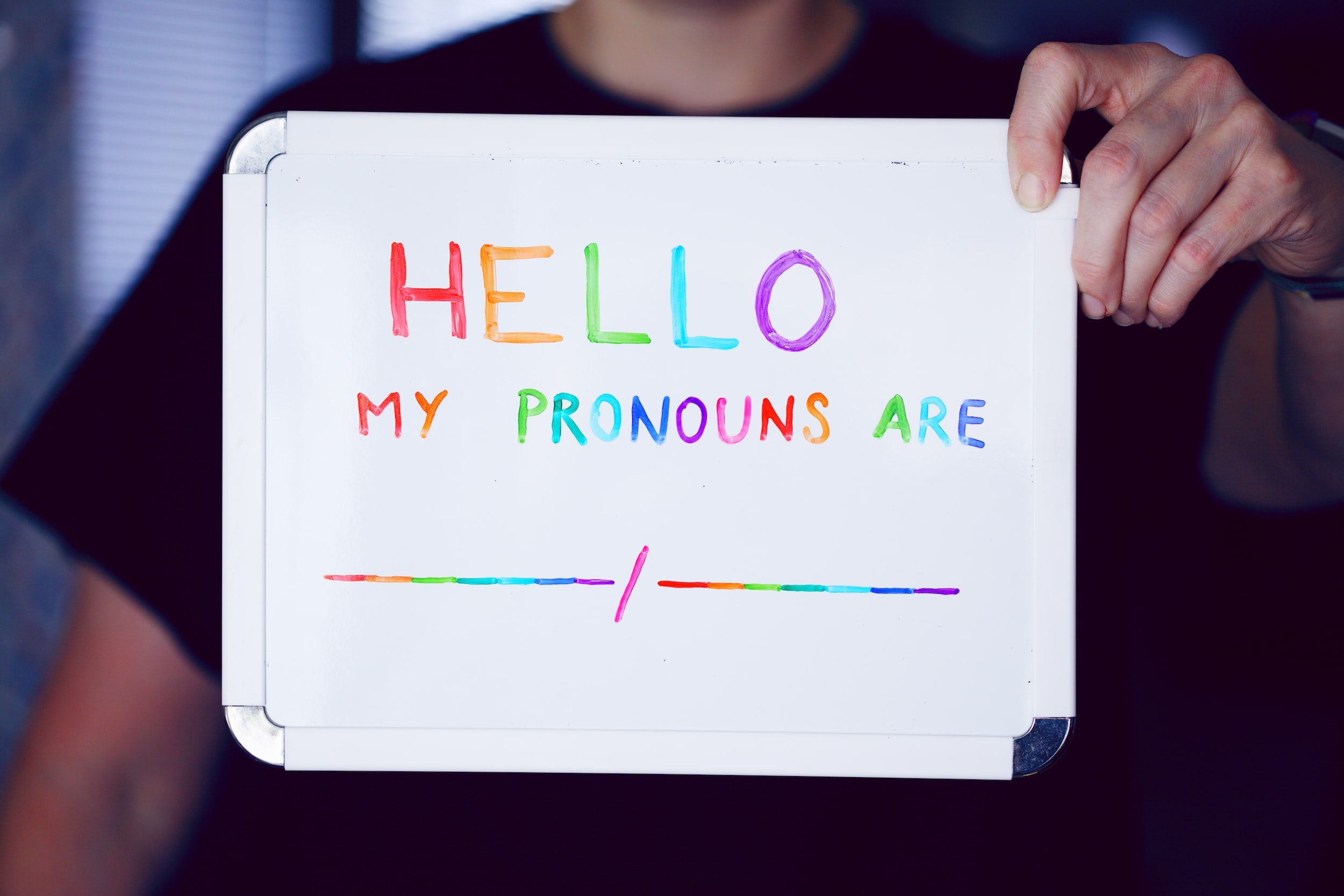
These days, most Americans are aware of the singular gender neutral usage of they/them pronouns even if they aren’t willing to use them but not many people are aware of neopronouns. Neopronouns are alternatives to he, she, and they pronouns used by some nonbinary people. Some common neopronouns are xe/xir/xirs, ze/hir/hirs, and fae/faer/faers. 

When you learn about them for the first time, they may seem daunting, so this blog post will break down what they are, how they are used, and why they are used. 

What are neopronouns?

A neopronoun functions just as any other pronoun does: to refer to someone by something other than their name while talking about them. Despite the name meaning “new pronoun,” the concept is actually not new. In 1789, William H. Marshall documented the existence of the singular gender neutral pronoun “ou,” which Marshall traced back to Middle English in the 14th century. 

There are generally two categories of types of neopronouns: those that mirror the structure of traditional pronouns, and nounself pronouns. An example of the mirroring category is xe/xir/xirs, pronounced like “zee/zeer/zeers,” while an example of the nounself category is fae/faer/faerself, derived from the word faery. An exception to these two broad categories is when people prefer to solely be called by their name instead of any pronouns. At the end of the day, neopronouns include any pronouns aside from he/she/they.   

How are neopronouns used?

Luckily, despite how foreign the concept of neopronouns may be to, these new words don’t require you to learn new grammar rules. They can be used in the place of traditional pronouns with the equivalent conjugation of the verb following it. Let’s explore some example sentences:

Using a traditional pronoun: He went to the store to pick up his medication. 

Using a neopronoun: Xe went to the store to pick up xir medication.

Using a nounself pronoun: Fae went to the store to pick up faer medication. 

Why are neopronouns used?

Each individual has different reasons for wanting to use neopronouns. While it varies from person to person, here are some of the most common reasons why someone would choose to use neopronouns over traditional pronouns. 

  1. They/them pronouns are often viewed as androgynous, but not every non-binary person experiences their gender as androgynous or “in the middle”, such as someone who identifies as a demigirl

  2. Neopronouns are part of gender expression, similarly to one's external appearance. Some people feel like their gender cannot be appropriately conveyed by she, he, or they pronouns. 

  3. The use of neopronouns is particularly popular amongst autistic people. Autistic people experience the world and their internal identity differently from allistic/neurotypical people which includes gender. This is not to say that one has to be autistic to use neopronouns but they tend to be more common amongst autistic nonbinary people due to “different ways autistic people interpret and engage with themselves and others.”

Criticisms of Neopronouns

Neopronouns are a hotly debated topic for several reasons, both inside and outside of the trans community. Here are some of the most common criticisms:

  1. A primary function of pronouns as a part of speech is to make it easier to refer to someone. Due to their rarity, neopronouns can complicate communication rather than simplify it.

  2. The trans+ community as a whole faces more pressing and serious issues related to harassment, violence, and civil rights; some people feel fighting for neopronoun use is not worth their time and energy if it will distract from more serious concerns.

  3. To outsiders, neopronouns are easy ammo to make fun of and invalidate trans people as a whole. Some LGTBQ+ people who criticize neopronouns worry that this sets back the community in terms of gaining equal rights and acceptance.

While there is some validity to these criticisms, at the end of the day it is a basic sign of respect to use someone’s requested pronouns. If it is challenging for you, that is okay, challenge yourself! The unfamiliarity makes it totally understandable if you are confused. That being said, difficulty is not a reason to disrespect someone. It is okay to be upfront with people who use neopronouns that you struggle with using them, and more often than not, they will understand and be open to a respectful dialogue about it. It is important to keep in mind that just because something might not seem important to you, you cannot understand the full nuance of why it is important to someone else and therefore cannot decide on their behalf that it does not matter. Misgendering someone or using invalidating language is never the best solution and runs the risk of damaging the relationship. 

If you are still confused about using neopronouns, here are additional resources to further your research: